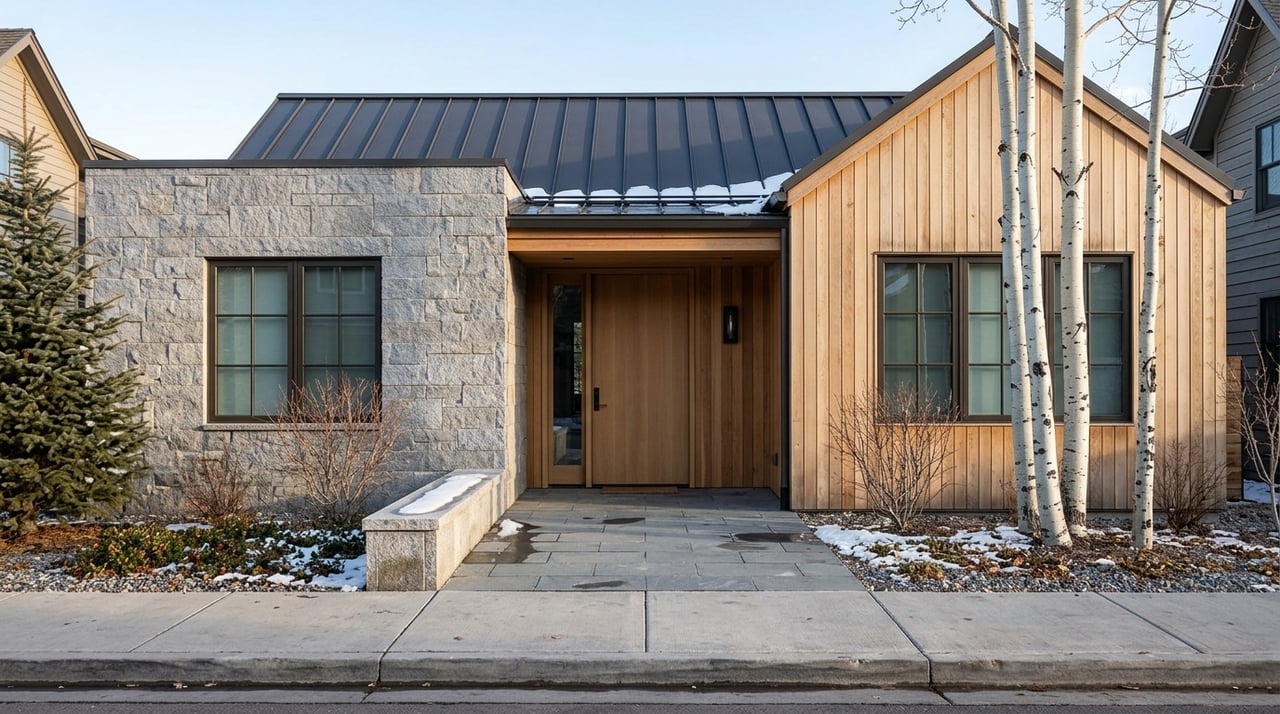
Aspen In Town vs Outskirts: Find Your Best Fit
If you picture Aspen as one single lifestyle, you may miss the choice that matters most. Living in Aspen’s downtown core feels very different from living just beyond it, even when the distance on a map looks small. If you are deciding where you want your daily routine to happen, this guide will help you compare walkability, transit, parking, mountain access, and overall pace of life in a clearer way. Let’s dive in.
In-town Aspen centers on the downtown commercial core and adjacent historic center. According to Aspen’s planning documents, this is the city’s primary commercial center for tourism, employment, goods and services, shopping, and dining.
That concentration shapes daily life. The core feels active, compact, and designed around being out on foot, with historic buildings, public spaces, and a steady mix of local activity and visitor energy.
The character of downtown is also tied to preservation. Aspen’s Main Street and Commercial Core historic districts were established in the early 1970s, and the city has almost 300 designated historic properties.
One of the clearest signs of in-town living is the Aspen Pedestrian Mall. Completed in 1976 and recognized by the American Planning Association, it reinforces the idea that the center is built for people more than cars.
If you live in or near the core, many daily outings can feel spontaneous. You can step out for dinner, browse shops, visit galleries, or head to a cultural venue without planning your whole day around driving and parking.
Culture is also woven into the center of town. The Wheeler Opera House and Aspen Art Museum are on East Hyman Avenue, and the Aspen Institute campus sits at 1000 N 3rd Street on the edge of the core.
For many buyers, the biggest advantage of in-town living is convenience. The city’s free shuttle network is designed to connect residents with offices, trailheads, ski lifts, and other destinations around town, and the Downtowner provides free door-to-door service within its service area.
That makes car-light living realistic for many households. If you like the idea of walking to a morning coffee, using a shuttle for errands, and keeping your car parked more often, downtown Aspen supports that rhythm.
There is also a strong connection between town and the mountain. Aspen Mountain rises directly from downtown, and the Silver Queen Gondola links town to the summit in about 14 minutes.
For skiers and second-home buyers, that is a major lifestyle feature. If your ideal winter day starts with a short walk to the gondola, few settings in the Roaring Fork Valley offer that same level of direct access.
The same features that make downtown exciting can also make it feel more managed. Parking in the downtown core is tightly controlled, with a four-hour limit and seasonal rates intended to promote turnover and improve access for shoppers and diners.
In practical terms, that means you should expect more structure around how cars fit into daily life. Aspen’s parking and transit policies are intentionally designed to reduce congestion and preserve small-town character, so the center feels lively but not car-oriented.
You may also notice less separation from the resort economy. Because the core is the center of tourism, dining, and commerce, you are closer to visitor traffic and the general bustle that comes with Aspen’s year-round appeal.
In Aspen, the outskirts are not one uniform area. The city’s planning area includes places such as Red Mountain, East of Aspen, the Airport Business Center, the airport area, the Buttermilk base area, and parts of the Castle Creek and Maroon Creek valleys.
That is important because the lifestyle shift is not simply “urban versus rural.” In many cases, it is more accurate to think of the outskirts as a collection of distinct neighborhood nodes connected by roads, shuttles, and the wider valley transportation network.
Aspen’s community plan describes the west-of-Castle-Creek corridor as a gateway made up of separate nodes, including the airport, business center, Buttermilk, housing, and golf courses, rather than one continuous urban strip. The same plan also makes clear that the downtown core should remain Aspen’s primary commercial center.
Once you move beyond downtown, the setting tends to feel more residential and more landscape-driven. Planning documents emphasize scenic view buffers, open-space protection, and maintaining undeveloped spaces between nodes in the west corridor.
That creates a different kind of daily experience. Instead of stepping into the middle of Aspen’s busiest pedestrian environment, you may feel more connected to neighborhood scale, mountain views, and the sense of moving between distinct places rather than living in one concentrated center.
For some buyers, that extra separation is the point. If you want Aspen access without having your whole day revolve around the downtown core, the outskirts can offer a better balance.
Living outside the core does not mean giving up convenience. It usually means convenience works differently.
Transit is more neighborhood-specific on the edges of town. City shuttles serve Burlingame/HWY 82, Castle/Maroon, Cemetery Lane, Hunter Creek, Mountain Valley, Cross Town, and Aspen Highlands, connecting riders to destinations such as Aspen Valley Hospital, the Recreation Center, grocery shopping, the post office, the Music Tent, Buttermilk, and Aspen Highlands Village.
Hunter Creek is a useful example. The shuttle route there provides access to grocery shopping and Aspen’s Post Office, while also running near Smuggler Mountain trail.
That kind of setup can appeal to buyers who still want practical access to town services but prefer a neighborhood that feels a little more removed from downtown intensity. Your routine may be more route-based, but it can still be very functional.
If your household keeps cars, the outskirts may feel easier day to day. Residential parking zones just outside the downtown core are described by the city as a convenient parking value.
That does not mean every outlying area is car-dependent in the same way. It does mean parking friction is often lower outside the tightly managed center, which can be meaningful if you host guests, commute through the valley, or simply prefer the flexibility of driving.
For many buyers, this becomes a quality-of-life question. Would you rather walk more and drive less, or have easier vehicle access with a little more travel built into your day?
Mountain access is one of the biggest lifestyle filters in Aspen. If your top priority is direct ski access to Aspen Mountain, in-town living stands out because the gondola rises from downtown.
But ski life in the Aspen area is not limited to one mountain. The broader transit system supports access patterns that can make other locations workable, especially if your routine revolves around Buttermilk, Aspen Highlands, Snowmass, or travel across the Roaring Fork Valley.
Aspen is part of a larger valley-wide system, and the city-county plan notes that the area is integral to the Roaring Fork Valley. RFTA connects Aspen with Glenwood Springs and other communities, offers fare-free circulator service in Aspen, and runs ski shuttle service to the four Aspen/Snowmass mountains.
RFTA’s route map also shows year-round service linking Glenwood Springs, Carbondale, Basalt, Aspen Village, and Aspen/Snowmass. For some buyers, that makes a wider home search more realistic once they are comfortable using transit as part of everyday life.
If you love the idea of walking to the gondola, strolling the pedestrian mall, and having dining, shopping, and culture close at hand, in-town Aspen may feel like the right fit. It offers concentration, immediacy, and a distinctly pedestrian routine.
If you want more separation, a more residential feel, and a setting shaped more by neighborhood patterns and landscape, the outskirts may suit you better. You can still remain connected to town, but your day may rely more on shuttles, driving, or a mix of both.
Neither option is universally better. The real question is how you want Aspen to function in your everyday life.
That is where local guidance matters. Aspen is best understood not as one lifestyle, but as a compact downtown experience surrounded by several distinct neighborhood types, each with its own mix of walkability, transit reliance, parking ease, and mountain access.
If you are weighing where you would feel most at home in Aspen or elsewhere in the Roaring Fork Valley, Karen Peirson can help you compare the lifestyle behind the listing and choose a location that truly fits your routine.

Start your Aspen home search with a trusted local expert. Whether you're looking for a ski-in/ski-out retreat or a cozy home in the valley, Karen will guide you every step of the way.