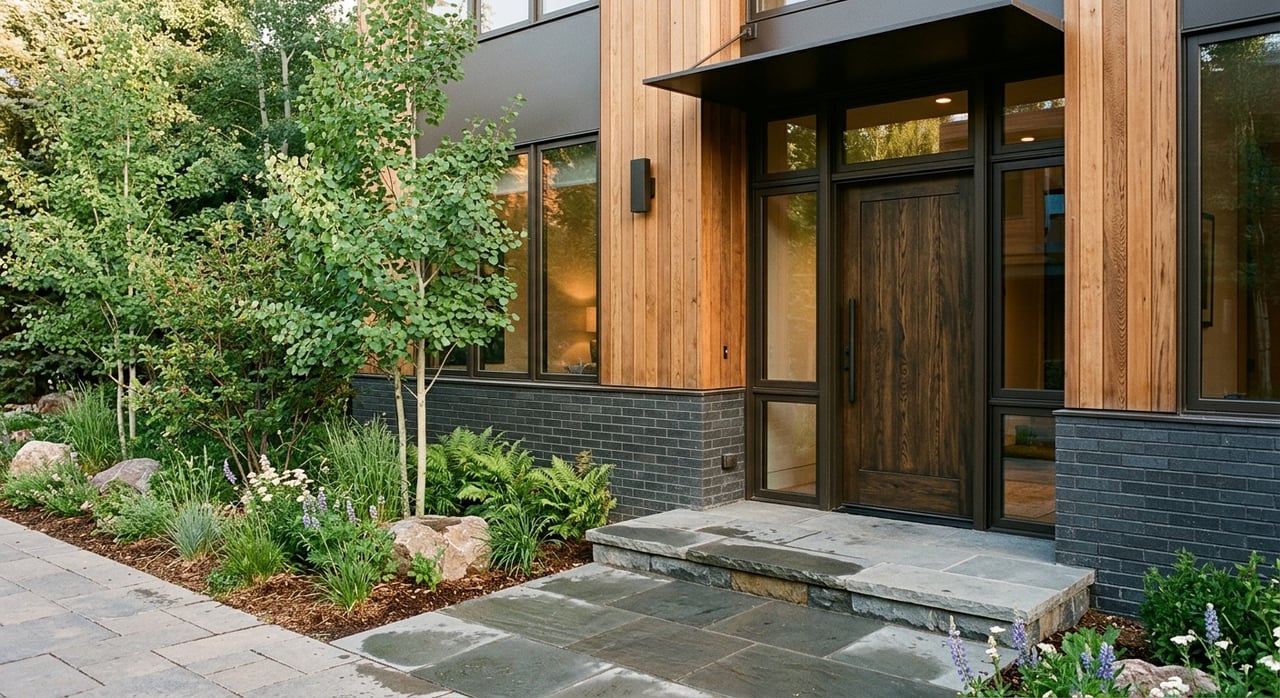
Downtown Basalt vs Willits: Compare Basalt Lifestyles
If you are deciding between Downtown Basalt and Willits, you are really choosing between two distinct versions of Basalt living. Both areas serve as major centers in town, but they offer different settings, housing patterns, and day-to-day experiences. This guide will help you compare their character, amenities, walkability, and housing so you can focus on the part of Basalt that fits you best. Let’s dive in.
Basalt officially frames Historic Downtown and Southside in East Basalt, along with Willits in West Basalt, as the town’s two main centers. That matters because this is not just a casual local label. It reflects how the town itself thinks about growth, planning, and neighborhood identity.
In simple terms, Downtown Basalt is the older railroad-era core. Willits is the newer mixed-use district that grew out of an early-2000s planned development. If you are comparing the two, the clearest difference is this: downtown feels historic and river-oriented, while Willits feels newer and convenience-driven.
Downtown Basalt centers on Midland Avenue and the nearby Hill District in the town’s original township. Town planning documents describe it as Old Downtown or the Historic District, with an emphasis on railroad heritage, small-town charm, and design standards that help new additions fit the existing setting.
That historic identity is visible in the built environment. Some Midland Avenue facades date to the 1890s, and the district includes historically designated buildings alongside restaurants, cafes, retail, services, and art galleries. If you are drawn to places with older architecture and a main-street feel, downtown has that established character.
Downtown Basalt is being shaped to feel even more pedestrian-friendly. The town’s Midland Avenue streetscape work focuses on wider sidewalks, better ADA access, more seating, bike parking, and a stronger connection between the historic core and the Roaring Fork River.
That means the area is not just about preserved buildings. It is also about how you move through the neighborhood and use it day to day. Recent town programming near Basalt River Park, including a free mini-golf course, also reinforces downtown’s role as a civic and gathering space.
If being close to the river matters to you, Downtown Basalt has the strongest river-oriented identity of the two areas. Town parks information points to river-focused amenities at Midland Park, along with major public spaces like Confluence Park and Basalt River Park.
Downtown also connects into the broader trail network. RFTA maintains the Rio Grande Trail from Emma Road in Basalt toward Aspen, and the planned Safe Routes to School work along the Emma and Two Rivers corridor is designed to improve links between historic downtown, schools, and key transit stops.
Housing near historic downtown tends to be more limited in scale. The town’s code preserves the Traditional Neighborhood and Hill District pattern, and accessory dwelling units are allowed only through town review on larger lots.
Recent approvals suggest measured infill rather than large-scale redevelopment. One example is the approved conversion of second-floor commercial space at 175 Midland Avenue into up to seven studio units. If you are looking for housing in downtown, expect a setting shaped by compatibility and gradual change more than by major new residential blocks.
Willits began as a planned mixed-use district. Town planning history notes the 2001 approval of Willits Town Center as a 26-acre mixed-use development, while broader planned unit development materials describe the Sopris Meadows and Willits Town Center area as a 125-acre mixed-use development.
Today, the town describes Willits as the business district of West Basalt. That background helps explain why the area feels different from downtown. It was designed as a mixed-use center from the start, rather than evolving from a railroad-era core.
Willits reads more like a modern town center than a historic main street. Town materials highlight amenities such as Whole Foods, restaurants, retail and service shops, TACAW, residential units, parklets, a performance stage, a kids’ water feature, wide walkways, plentiful parking, and an RFTA bus rapid transit station along Highway 82.
For many buyers, that translates into convenience. You may find it easier to run errands, catch transit, or enjoy arts and community events within a compact area. If your lifestyle leans toward newer infrastructure and mixed-use convenience, Willits often stands out.
Compared with downtown’s riverfront focus, Willits emphasizes internal mobility and connections. The Willits Lane Connectivity and Wayfinding Plan is aimed at safer pedestrian, bike, and transit movement, along with better links between Historic Basalt and Willits.
The area also includes park and path assets such as Triangle Park and Willits Linear Park. Recent town work has included Triangle Park improvements, which supports the idea that Willits is built around movement, access, and everyday usability.
Willits offers more of the newer condo, apartment, and mixed-use housing types many buyers expect in a planned town center. Town documents show Parcel 5 in Sopris Meadows approved for 155 dwellings, including 109 market-rate condominiums and 46 deed-restricted affordable units.
A 2024 approval also allows a mixed-use building at Lot 1A in Willits Lane Town Center with about 3,800 square feet of commercial and office space plus 23 dwellings. The town is also exploring affordable workforce housing and community space on a 2.3-acre parcel south of TACAW. In short, Willits has a more active pipeline of newer residential product.
Downtown Basalt feels rooted in history. Its identity comes from Midland Avenue, older facades, railroad heritage, and a traditional small-town setting tied closely to the river.
Willits feels more contemporary. Its identity comes from planned mixed-use design, newer buildings, and a layout centered on shopping, services, arts, transit, and public gathering features.
Both areas are walkable, but they are walkable in different ways. Downtown’s walkability is being strengthened through streetscape improvements that connect the core more directly to the river and public parks.
Willits is organized around wide walkways, parklets, transit access, and internal path connections. If you want a historic walking environment, downtown may appeal more. If you want a newer, more structured pedestrian network, Willits may be the better fit.
Downtown Basalt has the stronger riverfront identity. Confluence Park, Basalt River Park, Midland Park, and access to the Rio Grande Trail all support a lifestyle tied to water, trails, and the historic core.
Willits offers greenspace and path connections through places like Triangle Park and Willits Linear Park. The outdoor experience there is less about riverfront character and more about neighborhood connectivity and internal public space.
If you prefer smaller-scale housing in an established setting, downtown may align better with your goals. Its housing profile is shaped by preservation, compatibility standards, and limited infill.
If you want newer condos, mixed-use living, or a broader range of recently approved residential options, Willits offers more of that product type. For buyers who prioritize newer construction patterns and convenience, that can be a major advantage.
For buyers, understanding the difference between Downtown Basalt and Willits can help you narrow your search faster. Even when both areas are within the same town, the lifestyle, housing stock, and daily rhythm can feel quite different.
For sellers, this comparison helps clarify positioning. A home near Midland Avenue may connect with buyers looking for historic character and river-town appeal, while a property in or near Willits may resonate more with buyers seeking convenience, mixed-use energy, and newer residential options.
In a market like Basalt, neighborhood storytelling matters. The right match is not just about price point or square footage. It is about how you want to live in the town every day.
If you want help comparing Basalt neighborhoods or understanding how a specific property fits into the local market, Karen Peirson offers thoughtful, high-touch guidance grounded in deep Roaring Fork Valley knowledge.

Start your Aspen home search with a trusted local expert. Whether you're looking for a ski-in/ski-out retreat or a cozy home in the valley, Karen will guide you every step of the way.