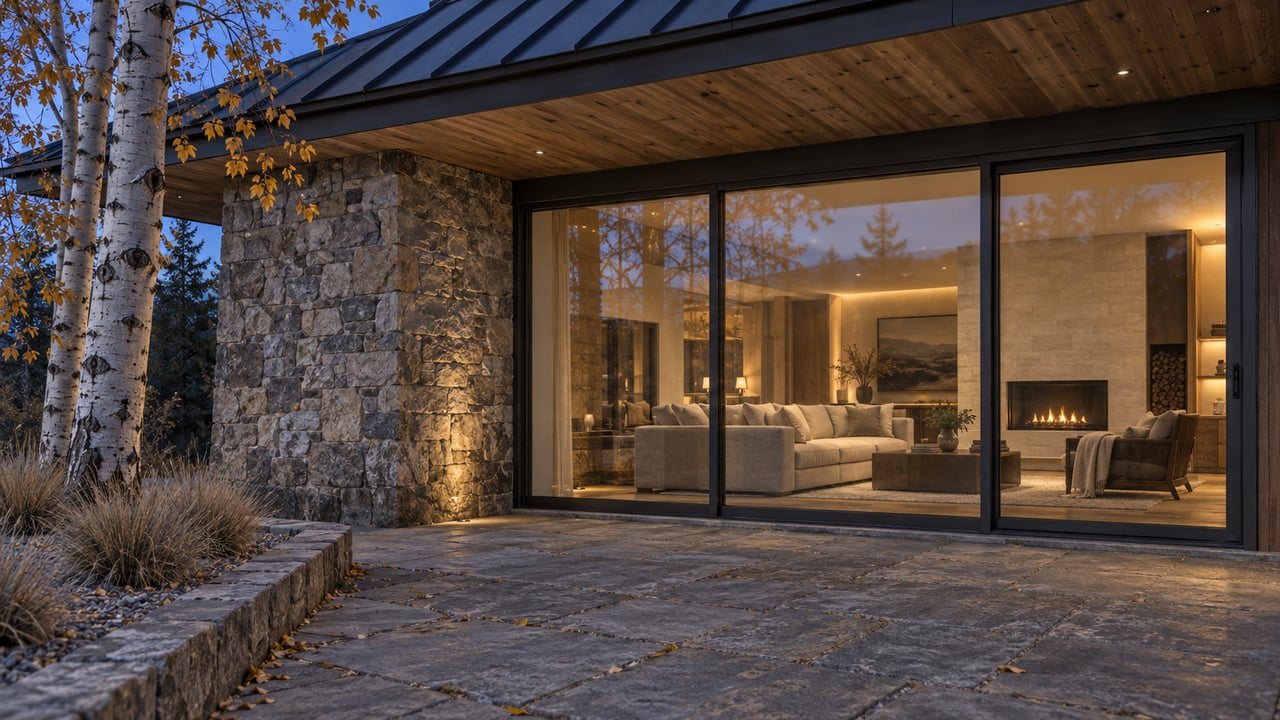
Old Snowmass's First Long-Night Season as a Dark Sky Community
"We're here to hopefully ensure into the future that our kids and their kids can still see a starry night," Martha Ferguson told the Aspen Times in February, the week Old Snowmass became an International Dark Sky Community. Spring and summer were easy on that promise, with short nights and porches mostly empty after dark. Between now and the December solstice, Old Snowmass gets its longest nights since certification, three of the year's better meteor showers and the one stretch of the calendar when Pitkin County allows residential holiday lights. All three arrive in the same ten weeks.
The certification started with one bad viewing. Early one morning, Ferguson looked east expecting to see Jupiter and Venus near a thin crescent moon. Instead, two columns of light from a ranch about a quarter mile away washed them out. "It was going to be amazing," she said. "But I couldn't see it."
After that she went to the Snowmass Capitol Creek Caucus and founded WildSky Old Snowmass, a volunteer group that teaches people around the valley about light pollution. The Caucus has been around since 1974 as a nonprofit neighborhood organization for the Snowmass Creek and Capitol Creek valleys. It worked with Pitkin County on a countywide lighting code that meets dark sky standards and includes an overlay written specifically for Old Snowmass. The county adopted the code in 2025, its first update since 2006.
The certification put Old Snowmass among 20 certified dark sky places in Colorado and 273 worldwide. DarkSky International explained why it took organized work. Old Snowmass sits at about 7,500 feet, and the post-COVID wave of new residents brought more construction and, with it, more exterior lighting. That pressure hasn't eased since February, and this fall the nights get longer.
WildSky Old Snowmass keeps a 2026 sky calendar on its website. If you lay the county's lighting dates on top of it, you can see the problem.
| Date | In the sky | On the ground |
|---|---|---|
| Oct. 4 | Saturn at opposition | 10 p.m. to 6 a.m. lighting curfew in effect, as it has been since March 1, 2025 |
| Oct. 7 | Draconids meteor shower | |
| Oct. 10 | New moon | |
| Oct. 21–22 | Orionid meteor shower | |
| Oct. 26 | Full Hunter's Moon | |
| Nov. 4–5 | Taurids meteor shower | |
| Nov. 9 | New moon | |
| Nov. 14 | Forest Service parking alert at Snowmass Creek Trailhead scheduled to end | |
| Nov. 15 | Residential holiday lights allowed from today through Jan. 30 | |
| Nov. 17–18 | Leonid meteor shower | |
| Nov. 24–25 | Full supermoon, then Uranus at opposition | |
| Dec. 9 | New moon | |
| Dec. 13–14 | Geminid meteor shower | |
| Dec. 21–22 | Solstice and Ursid meteor shower |
Saturn reaches opposition today, Oct. 4. The Orionids and Taurids come before string lights are allowed anywhere. The Leonids arrive two days after the holiday window opens. The Geminids, on Dec. 13–14, arrive with the window in full swing. The Ursids land on the longest night of the year.
Under Pitkin County's code, residential holiday lights are banned outdoors for most of the year and allowed only from Nov. 15 through Jan. 30. Non-residential holiday displays get until March 1. The rest of the code applies all year, and a few rules matter more once it's dark by late afternoon:
The Old Snowmass overlay, which took effect in January, adds one more rule. When development on land in the overlay needs Site Plan review, signs can't be lit in any way, from inside or outside.
The five-year grace period runs to March 2030, so an older fixture can legally stay up this winter as long as it's off by 10 p.m. and doesn't throw light onto a neighbor's property. That makes the curfew the rule that counts most during meteor season, because from 10 p.m. on, the code already requires most exterior lights to be off. If you're planning a light display or a fixture upgrade, the Pitkin County ordinance text is the document to read. Check with the county on your specific property, because this post isn't legal advice.
Enforcement is less formal than it might sound. Ferguson said most of Old Snowmass supported the initiative, and the people who weren't in compliance mostly didn't know it. The county takes complaints through its Building complaint process, and Code Enforcement follows up with the person who filed. County officials can also act on violations they see themselves. A notice to correct usually allows no more than 10 days unless an extension is granted.
The trailheads that make the darkness easy to reach get harder to use this season. Construction at the Snowmass Creek Trailhead started Aug. 17 and was expected to run through November. Pitkin County limited parking to 25 spaces during the work, and the trails stayed open. The Forest Service banned parking along the access road, with ticketing and towing. Its alert is scheduled to end Nov. 14, three days before the Leonids. The finished trailhead will have separate areas for day, overnight, ADA and trailer parking, plus a toilet and separate kiosks for hikers and equestrians. It's scheduled to open for the 2027 season in June. No one has confirmed yet that the work is done, so it's worth checking before a pre-dawn drive.
Capitol Creek has its own limits. The Forest Service says the last mile to the Capitol Creek trailhead is a four-wheel-drive road that gets slick when wet. Drivers without four-wheel drive are told to park at the BLM meadow about two and a quarter miles below the trailhead. The Forest Service also warns that from early October to late June, trails and trailheads in the Maroon Bells-Snowmass Wilderness may be snow-covered or impossible to reach.
Closer to home, the Basalt–Old Snowmass paved trail is open year-round and groomed for Nordic skiing in winter. The county's listing doesn't give hours, though, so year-round doesn't necessarily mean open after dark. Bionez Gulch, reached from Lazy Glen Open Space, closes Dec. 1 through April 30.
If you'd rather go at first light, ACES is leading a free birding walk at Windstar Preserve on Oct. 8, from 7:45 to 11 a.m. It's about four miles round trip, and you need to register. The walk falls the day after the Draconids peak and two days before the new moon. Our seasonal readiness guide for Old Snowmass covers the rest of the winter prep.
The dark sky push in Old Snowmass started with a hidden planet, but the county commissioner representing the area talks about it mostly in terms of habitat.
"The valley of Snowmass and Capitol Creek are critical wildlife habitats. Maintaining the night sky protects this crucial land and complements the protections we have put in place through conservation easements and additions to wilderness." — Pitkin County Commissioner Jeffrey Woodruff
DarkSky International's announcement names the animals that move through these valleys after dark: mountain lions, black bears, a newly introduced wolf population, and large herds of elk and mule deer that migrate through regularly. Ferguson describes the goal the same way. The point is to protect nocturnal wildlife and to keep a sky that future generations can still see. The certification announcement calls the designation "not just a title, but a commitment," and says the community will keep educating its own residents and neighboring areas.
WildSky's event page doesn't list a fall 2026 star party or fixture-swap clinic yet, and the Caucus events page says there's nothing scheduled right now. The sky calendar is already up, though. The Geminids peak Dec. 13–14, four weeks into the holiday-light window.
If your exterior lighting predates the 2025 code and you're wondering how it fits with a sale, a remodel or simply the next ten winters on Snowmass Creek, Karen Peirson is glad to talk it over. Karen knows Old Snowmass parcel by parcel, and she can help you figure out what the county's 2030 retrofit deadline means for your property. Book a consultation whenever you're ready.

Start your Aspen home search with a trusted local expert. Whether you're looking for a ski-in/ski-out retreat or a cozy home in the valley, Karen will guide you every step of the way.